

John D. Burns talks to Mark Lambert about his book, A man for all mountains, celebrating the remarkable life of mountaineer, broadcaster and educator, Jack Longland.

Mark Lambert has produced far more than a biography. He’s recreated an era when great unclimbed cliffs still existed, Everest remained a mystery, Greenland’s highest summit was unclimbed, and Britain’s finest climbers simply got on with extraordinary adventures. It was however something else, something quite striking that captivated me about this book. Longland himself was clearly an excellent writer. Many climbing biographies rely on modern narrative around sparse historical sources, but here the subject’s own words repeatedly become the highlights of the book. That, perhaps more than anything, explains why his voice has echoed through climbing literature for nearly a century.
For anyone interested in the Golden Age of British mountaineering, it’s an immensely rewarding read.


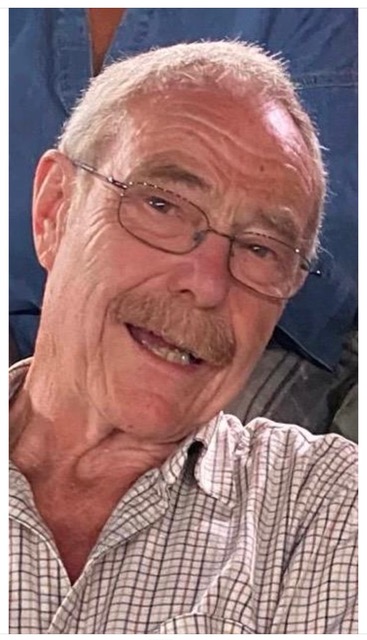
Mark Lambert
Jack Longland was one of Britain’s complete mountaineers: technically gifted, intellectually curious, adventurous, modest and seemingly happiest whenever there was unexplored ground ahead.
Here are a few extracts from the book…
Of Greenland and black and white photography.

‘In the clear northern light we could see the broad, unbroken line of the ice floes ahead, punctuated with big icebergs.’
‘The mountains faded as the coast bent away, a line of snow-marked peaks, with clean, white glaciers dropping to the fjords between. At once came a realisation of the drab inadequacy of most arctic photographs on seeing for the first time the glittering ice, the cold brilliance of the sky.’
‘The next day they woke to calmer seas. And soon they encountered their first Inuit, a pair hunting on the floes some four miles from the coast.’
‘The team spent an hour and a half on the summit. Fountaine was busy with his boiling-point thermometers, eventually producing similar results from all three to give a height of 12,250 feet (3,734 metres).’
‘Courtauld took theodolite readings to link in with his work at Camp VII, and Munck, rather sheepishly, produced a Danish flag.’
‘They had made the first ascent of the highest mountain in the Arctic, but as yet it had no name. Sometime later, the Place-name Committee in Copenhagen decided on Gunnbjørn Tinde. ‘Tinde’ means ‘summit’, and ‘Gunnbjørn’ recalled the tenth-century Viking Gunnbjörn Ulfsson, who was driven by a storm into the seas west of Iceland, saw glaciers to the west and was thus the first to discover Greenland.’

Speaking of his famous descent with eight porters on the 1933 Everest expedition.
On the journey to reach the campsite.
‘Perched on the north face of Everest, it was also the most inhospitable, the most precarious and probably the most dangerous. The word ‘campsite’ had no meaning here – this was a tiny ledge to which a six-by-four-foot tent had been made to cling only after snow and ice had been hacked out and a stony platform of sorts scraped together at its outer edge. Even then the tent floor sloped crazily downwards and its outermost third overhung the edge, flapping over the face that fell 6,000 feet to the Rongbuk Glacier.’
‘The north face of Everest is made up of slabs overlapping like tiles on a roof pitched at about forty-five degrees. These slabs are devoid of holds or features so that ice or snow clings to them only here and there; progress depended upon the tenuous grip of boot nails and a steady balance. There were few if any anchor points, so if one man were to slip, he would pull with him any others to whom he was roped.
So they had climbed unroped.’
jack Longland was also an accomplished broadcaster appearing on many radio panel games which were among the most popular media shows of his generation.

A Man for all Mountains is available from all good bookstores, Amazon and direct from the publishers.

Wrote a lovely chapter on Mountaineering for The Boy’s Country Book (edited by John Moore) which inspired me when I was very very young.